

For me, I’m not sure I ever really knew who I was.
I had a baby when I was still basically a baby myself, and I did it without a mother to show me what being a mother looked like. I learned how to become what other people needed me to be long before I had much time to figure out who I was.
Becoming What Everyone Else Needed Me to Be
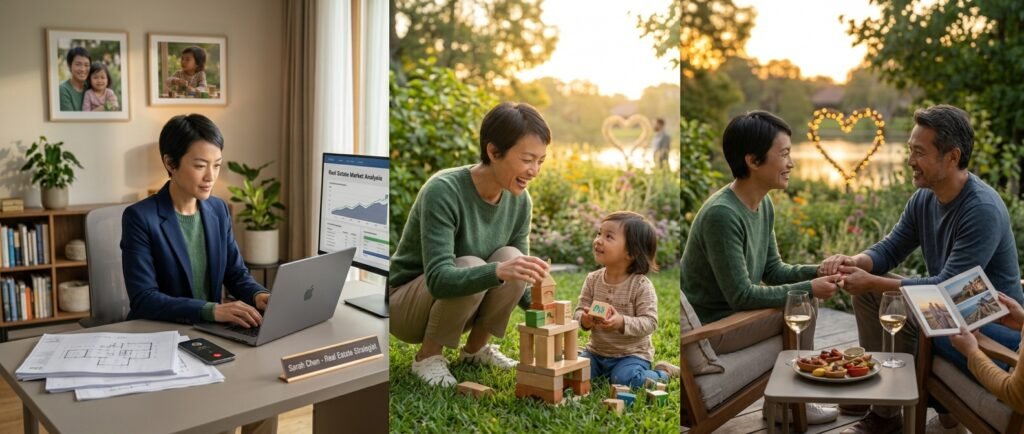
I became a mother. A caretaker. A breadwinner.
I became the wife or girlfriend who adapted to whoever I was with because somewhere along the way, I learned that was what I had to do to be loved.
And life just kept moving.
By midlife, I had raised two sons. I had earned two degrees and two professional licenses. I had been thoroughly broken in by community mental health. I had a slew of failed romantic relationships and marriages — don’t judge — and eventually found myself in a mostly healthy, strong relationship where I felt safe enough to start letting some of the walls come down.
When Accomplishments Felt Like My Only Value
For years, I thought my accomplishments were what made me valuable.
The degrees. The licenses. Being able to handle things. Being responsible. Being the one who could keep going.
Looking back now, I can see that I spent a lot of my life becoming who I thought I needed to be in order to survive, get ahead, be loved, and belong.
I also learned to silence parts of myself.
I had been told I was “too much.” Defensive. That I had an attitude problem.
What I understand now is that much of the time, I was trying to be independent and stand up for myself because I had learned early on that no one else was necessarily going to do it for me.
But when you hear those messages enough, you start editing yourself.
You quiet your opinions.
You second-guess your anger.
You question whether your needs are reasonable.
You wonder if being independent makes you difficult.
You learn to ask, Who do I need to be for this person? Instead of asking, Who am I?
Then Midlife Shows Up

And then midlife shows up.
For me, COVID played a huge part in that.
Suddenly there was isolation, more time at home, and access to all kinds of information about healing, relationships, boundaries, codependency, trauma, and self-discovery. For the first time, I had space to absorb some of it instead of just picking up the pieces of whatever had happened and moving on.
Because that’s what I had always done.
Bad relationship ending? Pick up the pieces and move on.
Toxic workplace? Keep going.
Kids need you? Handle it.
Life happens? Deal with it.
Who had time to stop and ask whether I felt like I was “too much” or whether I had lost myself?
But eventually I started asking a different question:
How do I want to be for this last part of my life?
Not, “Who does everybody else need me to be?”
Not, “What do I have to accomplish next?”
Not, “How do I keep everybody happy?”
How do I want to show up?
Learning to Show Up for Myself
That question has changed a lot for me.
Showing up for myself now can mean giving myself credit where it’s due. It means showing up for my business because, at this point, my business is part of me — an extension of who I am. I nurture it. I grow it. I make it pretty. I want it to stand out.
It also means allowing myself to rest because I need rest, not because I earned it.
That one is still a big deal.
Midlife has also forced me to reconsider some of the things I once thought defined me — how I connect with people, how I experience intimacy, what I need in relationships, and even what it means to feel like myself in my own body.
Redefining What Makes Me Valuable
The biggest shift may be this:
I used to believe my accomplishments made me valuable.
Now I think my value comes from my life experience — the good, the bad, and the ugly.
The things I’ve lived through.
The things I’ve survived.
The things I’ve learned.
The mistakes I’ve made.
The parts of myself I’m still figuring out.
And maybe that is part of what “finding yourself” in midlife actually looks like.
We Don’t Lose Ourselves All at Once
Because I don’t think most women suddenly wake up one morning and decide to lose themselves.
It happens slowly.
You become what your children need.
What your partner needs.
What your employer needs.
What your family expects.
You learn how to keep the peace, be dependable, be useful, be agreeable, be successful, be strong.
And underneath all of that can be a very real fear:
If I stop being who everyone needs me to be, will they still like me?
Will they still love me?
Will they leave?
Will they judge me?
Those fears can keep us wearing a mask for a very long time.
One thing I’ve learned as I’ve gotten older is that people come into our lives for a reason or a season. Not everyone is meant to stay.
And their opinions about me are none of my business.
That doesn’t mean I don’t care about people. It means their reaction to who I am no longer gets to be the final word on who I’m allowed to be.
That realization makes it a whole lot easier to take off the mask.
The PAUSE work I’ve been developing is really rooted in this idea: sometimes we haven’t exactly lost ourselves. We’ve become buried underneath years of caring, striving, adapting, pleasing, achieving, and surviving.
Midlife can be the point where we finally have enough space — or enough exhaustion — to notice.
Getting Acquainted With Her

Maybe the question isn’t:
“How do I get back to who I used to be?”
Maybe it’s:
“Who am I when I’m no longer trying so hard to be who everybody else needs?”
I’m still answering that question.
But I know more now than I used to.
I know I’m resilient.
I’m tenacious.
I’m hilarious.
I’m down-to-earth.
I’m empathetic.
And after spending much of my life figuring out how to show up for everyone else, I’m learning how to show up for myself.
Maybe that’s not losing myself after all.
Maybe I’m finally getting acquainted with her.
If any of this feels familiar — if you’re still figuring out who you are underneath everyone else’s needs — that’s not something you have to sort out alone.
I work with women who are ready to stop asking “who does everyone else need me to be” and start asking “who am I.” If that’s where you are, I’d love to talk. [Book a free consultation →]